
 Available in US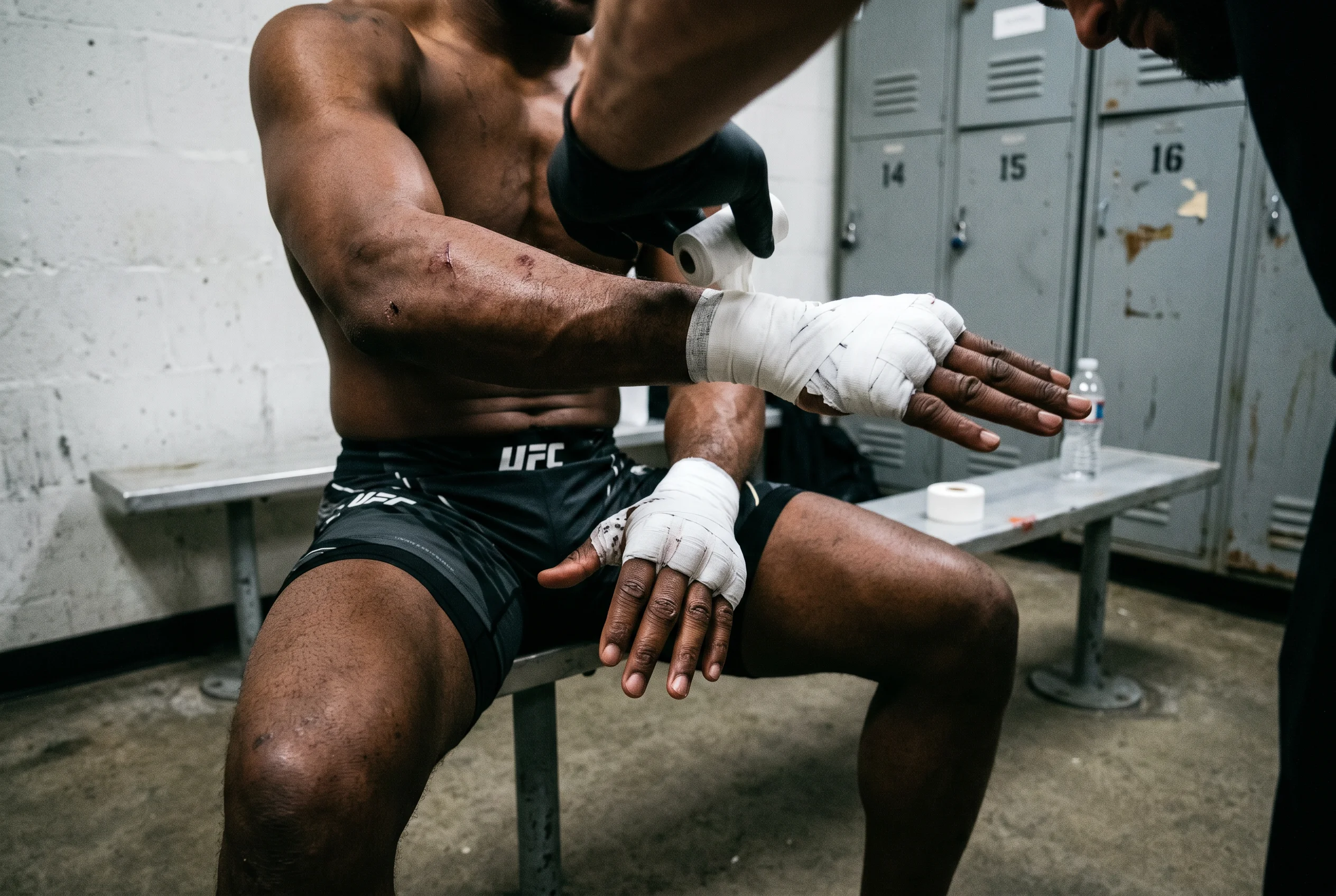
A preliminary-card fighter once told me, off the record and with a nervous laugh, that his disclosed purse for a UFC bout was less than what a London barista earns in three months. He loved the sport, trained full-time, and could not afford to take his family on holiday. That conversation has stayed with me because it puts a human face on a structural problem that directly affects everyone who bets on the UFC.
UFC fighters earn approximately 16-20% of the organisation’s revenue. In the NBA, NFL, and NHL, athletes take home around 50%. That gap is not a minor footnote, it is the single largest structural factor behind the integrity concerns that shadow combat sports betting, and any serious punter needs to understand what it means for the markets they are wagering in. MMA wagering reached £10.3 billion globally in 2024, growing 17% year on year. As the money flowing through the market accelerates, the pressure on the lowest-paid participants in the sport intensifies alongside it.
Comparing UFC Revenue Share with Major Sports Leagues
The UFC generated £1.5 billion in revenue in 2025 with a 57% profit margin. Those numbers make it one of the most commercially successful sports organisations on the planet, and one of the least generous to its athletes, proportionally speaking.
The arithmetic is blunt. If fighters receive 16-20% of £1.5 billion, the total athlete compensation pool sits somewhere between £240 million and £300 million, spread across a roster of roughly 600 active fighters. The average works out to £400,000-£500,000 per fighter, but averages are misleading because the distribution is wildly skewed. Champions and main-event stars command seven-figure purses. Preliminary-card fighters, many with families and full-time training expenses, often earn disclosed show money of £12,000 to £16,000 per fight, with a matching win bonus they only collect if they win.
Compare that with the revenue-sharing model in American team sports. NBA players collectively receive around 50% of basketball-related income, guaranteed by a collectively bargained agreement. NFL and NHL players operate under similar frameworks. These leagues have powerful players’ unions that negotiate minimum salaries, pension contributions, and healthcare. The UFC has no union, no collectively bargained revenue split, and no guaranteed minimum salary beyond what individual contracts specify. The compensation gap creates specific risks, as analysts have noted, when fighters face financial pressures while possessing insider knowledge about their own physical condition, training quality, and strategic intentions.
How Low Pay Creates Vulnerability to Fixing
I want to be clear: the vast majority of UFC fighters compete with absolute integrity. But structural incentives matter, and the incentive structure at the bottom of the UFC roster is poorly designed from an integrity standpoint.
Consider a fighter earning £12,000 to show and £12,000 to win on a preliminary card. After paying a manager (typically 15-20%), coaches, training-camp costs, and taxes, that £12,000 show purse might net them £6,000-£7,000 for eight to twelve weeks of full-time preparation. As veteran MMA journalist Ariel Helwani has observed, fighters making very little money for what they do become vulnerable when outside parties offer them multiples of their UFC pay to influence an outcome. Double or triple a £12,000 purse — £24,000 to £36,000, is life-changing money for someone struggling to cover rent, and it does not require sophisticated criminal networks to arrange.
The vulnerability is amplified by the nature of combat sports. Unlike team sports where fixing requires coordinating multiple athletes, a single fighter can influence the outcome of a bout. A deliberate clinch-heavy strategy that drags a fight to decision, a “lucky” punch that lands at an opportune moment, or a suspiciously early tap to a submission, these are difficult to distinguish from normal fight outcomes even for experienced observers. The individual nature of the sport makes integrity breaches both easier to execute and harder to detect.
This is not theoretical. The UFC has pulled fights from cards after receiving alerts from its betting integrity partners about suspicious wagering patterns. The monitoring exists because the risk is real, and the risk is real because the economics at the bottom of the roster create a pressure point that does not exist, at least not at the same scale — in sports where minimum salaries are six or seven figures.
What This Means for UFC Bettors
If you bet on UFC, you are betting in a market where integrity monitoring has become a structural necessity rather than a precaution. The UFC partnered with IC360 (Integrity Compliance 360) in January 2023 and added a second monitoring partnership with ProhiBet in September of the same year. That dual-layer surveillance system scans betting markets for anomalous line movements and reports suspicious patterns to both the UFC and regulatory bodies.
For the practical punter, the implications are specific. First, be cautious with heavy action on preliminary-card bouts involving lower-ranked fighters on short notice. These are the fights where the financial pressure is greatest, the public scrutiny is lowest, and the betting volume is thinnest — meaning any manipulation would have the largest impact on odds. Second, sudden, unexplained line movements on undercard fights deserve more suspicion than the same movements on main-event bouts, where the volume of legitimate sharp money is large enough to move lines on its own.
Third, and most importantly, recognise that the integrity infrastructure is improving but not complete. The IC360 and ProhiBet partnerships represent genuine progress, and the UFC’s willingness to pull fights based on integrity alerts shows the organisation takes the problem seriously. But monitoring catches patterns after money has been placed — it is reactive, not preventive. The underlying structural issue — the compensation gap — remains, and it will remain until either fighter pay rises significantly or a collectively bargained minimum salary changes the economics at the bottom of the roster.
Structural Pressure and the Punter’s Calculus
I do not raise these issues to suggest that every UFC fight is suspect — that would be absurd and unfair to the hundreds of fighters who compete with everything they have for purses that barely cover their costs. I raise them because informed betting requires acknowledging the market’s structural features, including its vulnerabilities. The 16-20% revenue share, the absence of a players’ union, the individual nature of the sport — these are facts that shape the market you are operating in. Ignoring them does not make your bets better. Understanding them, tracking integrity alerts, and weighting your stakes accordingly is what separates analysis from hope.
Articles
Published by the ufcfightbett team.
