
 Available in US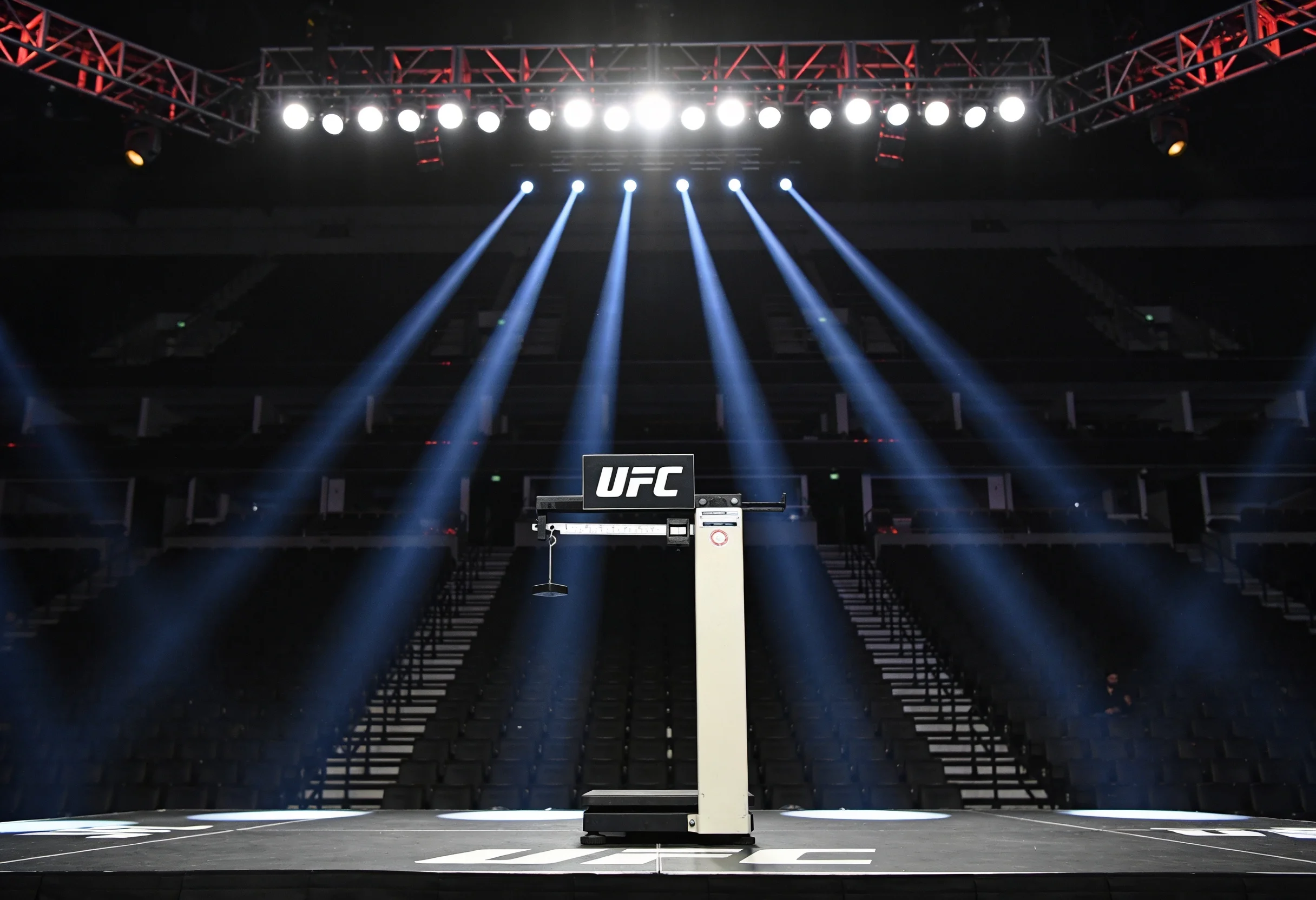
I watched a main event favourite step on the scale looking like a different person from the fighter I had studied all week. Hollow cheeks, sunken eyes, legs shaking slightly under the lights. He made weight, barely, and I immediately opened my betting account to check the line. It had not moved. The bookmaker’s model, built on career statistics and historical form, had not processed what my eyes just told me: this fighter had cut too hard and was going to pay for it inside the octagon. He lost by third-round TKO, and the underdog who beat him was sharper, faster and visibly more hydrated. That single weigh-in observation was worth more than any stat I had analysed all week.
Physical Impact of Extreme UFC Weight Cuts
Nearly every UFC fighter cuts weight before a bout, shedding anywhere from five to fifteen kilograms of water weight in the final days before weigh-in, then rehydrating overnight before the fight. The process is brutal: restricted water intake, hot baths, sauna sessions and sometimes diuretics, all designed to temporarily shrink the body to fit a weight limit that the fighter will exceed by fight night.
The physical toll is well-documented. Severe dehydration reduces blood volume, impairs cognitive function and diminishes muscular endurance. A fighter who has drained excessively may rehydrate their bodyweight but cannot fully restore their neurological function in twenty-four hours. Reaction times slow. Chin durability, the ability to absorb a clean shot without being knocked unconscious, deteriorates because the brain is more susceptible to concussive impact when the body has been severely dehydrated. In a division like heavyweight, where nearly 50% of fights end by KO/TKO per Bodyslam.net, a compromised chin is a critical liability. In lighter divisions, the impact manifests differently, reduced cardio output in the later rounds, slower recovery between exchanges and a visible drop in activity as the fight progresses.
The fighters who cut the most weight relative to their natural body size are the ones most at risk. A lightweight who walks around at 77 kg and cuts to 70 kg is shedding roughly 9% of their bodyweight. A bantamweight who walks at 68 kg and cuts to 61 kg is shedding 10%. That extra percentage point might seem marginal, but in terms of physical compromise, the relationship is not linear, each additional kilogram of water weight becomes harder to cut and harder to recover from.
Missed Weight and Its Effect on Win Rates
When a fighter misses weight, fails to make the division’s limit at the official weigh-in, the fight typically proceeds at a catchweight, and the fighter who missed forfeits a percentage of their purse to their opponent. From a betting perspective, the question is straightforward: does missing weight help or hurt the fighter who missed?
The data across UFC history suggests that fighters who miss weight win at a slightly higher rate than those who make weight in the same bout. This sounds counterintuitive until you think about what missing weight actually means in practice. The fighter who missed did not endure the final, most punishing phase of their weight cut. They walked into the cage heavier, better hydrated and less physically compromised than their opponent, who drained to the limit. The size and recovery advantage often outweighs the financial penalty.
The overall finish rate in the UFC, roughly 53%, per MMA.Social — applies to standard fights, but missed-weight bouts skew toward finishes because one fighter is physically larger and fresher. When I see a fighter miss weight by a significant margin — more than a kilogram over the limit — I immediately reassess the line. If the bookmaker has not adjusted enough, the missed-weight fighter often represents unexpected value because the market is slow to process the physical implications. Conversely, the fighter who made weight may now be facing a larger, less drained opponent than they prepared for, and their price should lengthen accordingly.
How Bookmakers Adjust (or Fail to Adjust) After Weigh-Ins
This is where the edge sits. Bookmakers adjust lines after weigh-in results, but the adjustments are often too small because the models are not designed to process qualitative physical data. A model that inputs win-loss records, striking stats and grappling metrics does not have a field for “looked terrible on the scale.” It does not factor in whether a fighter’s hands were trembling during the stare-down or whether they immediately sat down after stepping off the scale — subtle physical cues that experienced observers recognise as signs of a severe cut.
MMA wagering volume hit £10.3 billion in 2024, a 17% year-on-year increase according to industry data, and that growing volume has made bookmakers more sophisticated in many areas. But weight-cut assessment remains a gap. The adjustment after a missed weight is typically mechanical — a 0.10 to 0.20 shift in the odds — rather than proportional to the physical reality. If a fighter missed weight by 1.5 kg and looks physically compromised at the weigh-in, a 0.15 line shift is almost certainly insufficient.
I maintain a personal database of weigh-in observations. For every fight I bet on, I note whether each fighter made weight comfortably (hit the mark with room to spare), made weight with difficulty (used the full two hours, looked drained) or missed weight entirely. Over five years of data, fighters who made weight comfortably outperformed their closing-line probability by a small but consistent margin, while fighters who made weight with visible difficulty underperformed. The difference is not large on any single fight — perhaps 2-3% in terms of win probability — but across hundreds of bets, that edge compounds.
The weight class betting guide covers how divisional finish rates shape markets at a structural level, but weight cuts add a fight-specific overlay on top of that structure. A heavyweight bout between two fighters who both compete close to their natural weight is a different betting proposition from a bantamweight bout between two fighters who both cut 10%+ of their bodyweight. The division sets the baseline; the weight cut adjusts it.
Weigh-In Data as a Late Edge
Weight-cut analysis is unique among UFC betting edges because it arrives late — typically twenty-four hours before the first fight. By the time weigh-in results are public, you have already done your matchup analysis, reviewed the stats and formed a view. The weigh-in either confirms that view or challenges it, and the punters who profit from this edge are the ones willing to adjust their positions based on new physical evidence rather than clinging to the analysis they completed three days ago.
My process is simple. I watch every official weigh-in for cards I am betting on. I note the physical condition of each fighter, whether they made weight comfortably or struggled, and whether anything looks different from their previous weigh-ins. If a fighter who normally makes weight easily appears noticeably drained, I shorten my confidence in their performance and check whether the line has adjusted. If it has not, I either reduce my stake on that fighter or look for value on the other side.
This is not glamorous analysis. It does not involve complex models or proprietary data. It involves watching a broadcast that is freely available and making observations that most casual bettors skip because they have already placed their bets earlier in the week. The edge is not in the information itself — it is in the willingness to act on it when the market has not.
Articles
Published by the ufcfightbett team.
